
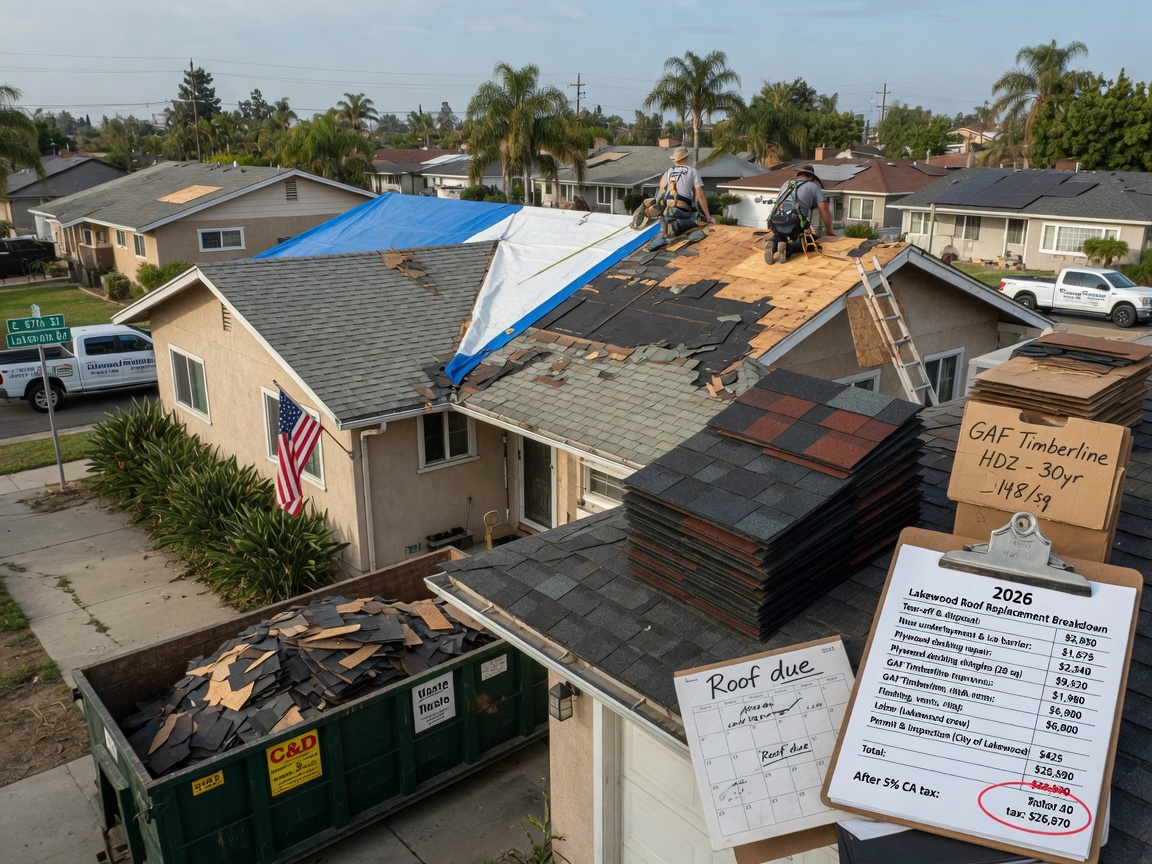
Norwalk is a close relative of Lakewood in roofing terms. It built out through the 1950s on a similar postwar tract pattern, with single-story homes, low-pitch gables and composition shingle, and it is running on the same replacement clock. Most original homes here are on their third or fourth roof and carry two layers already, which means California's two-layer cap makes the next one a full tear-off.
What sets Norwalk apart is the volume of aftermarket additions on the roof. Aluminum patio covers, enclosed porches and carport extensions added through the 1960s and 1970s are near universal in this city, and the point where they attach to the main roof is our most common leak call. The original installers routinely fastened them straight through the roof covering and sealed the penetrations with mastic, which was never a permanent detail and is now decades past failing. Re-caulking it buys a season. Re-detailing the connection with proper flashing fixes it.
Norwalk also carries more commercial roof than its size suggests. Cerritos College, the Metro C Line terminus and the retail corridors along Rosecrans, Firestone and Pioneer put a meaningful amount of low-slope membrane in the city. Those jobs begin with core sampling rather than a walkover, because whether the insulation under the membrane is dry decides between a restoration coating and a full replacement, and the price difference between those is roughly double.
Access here is uncomplicated. Streets and lots follow the same generous postwar layout as Lakewood, so staging, dumpster placement and crew movement are straightforward on most residential jobs.
Around Norwalk
We regularly work near:
- 📍Cerritos College
- 📍Norwalk Town Square
- 📍Hargitt House Museum
- 📍Metro C Line Norwalk Station
- 📍Norwalk Park
- 📍Rosecrans Avenue corridor
Roofing Lakewood Ca in Norwalk — Local Notes
- •1950s postwar tract on the same build and replacement cycle as Lakewood, with most homes now carrying two layers.
- •Aluminum patio covers and enclosed porches added in the 1960s and 1970s are widespread, and their roof tie-ins are the leading leak source in the city.
- •Those tie-ins were typically fastened through the roof covering and sealed with mastic, which needs re-detailing rather than re-caulking.
- •Commercial low-slope roof volume is higher than the city's size suggests, concentrated along Rosecrans, Firestone and Pioneer.
- •Street widths and lot layouts make residential access and staging straightforward.