
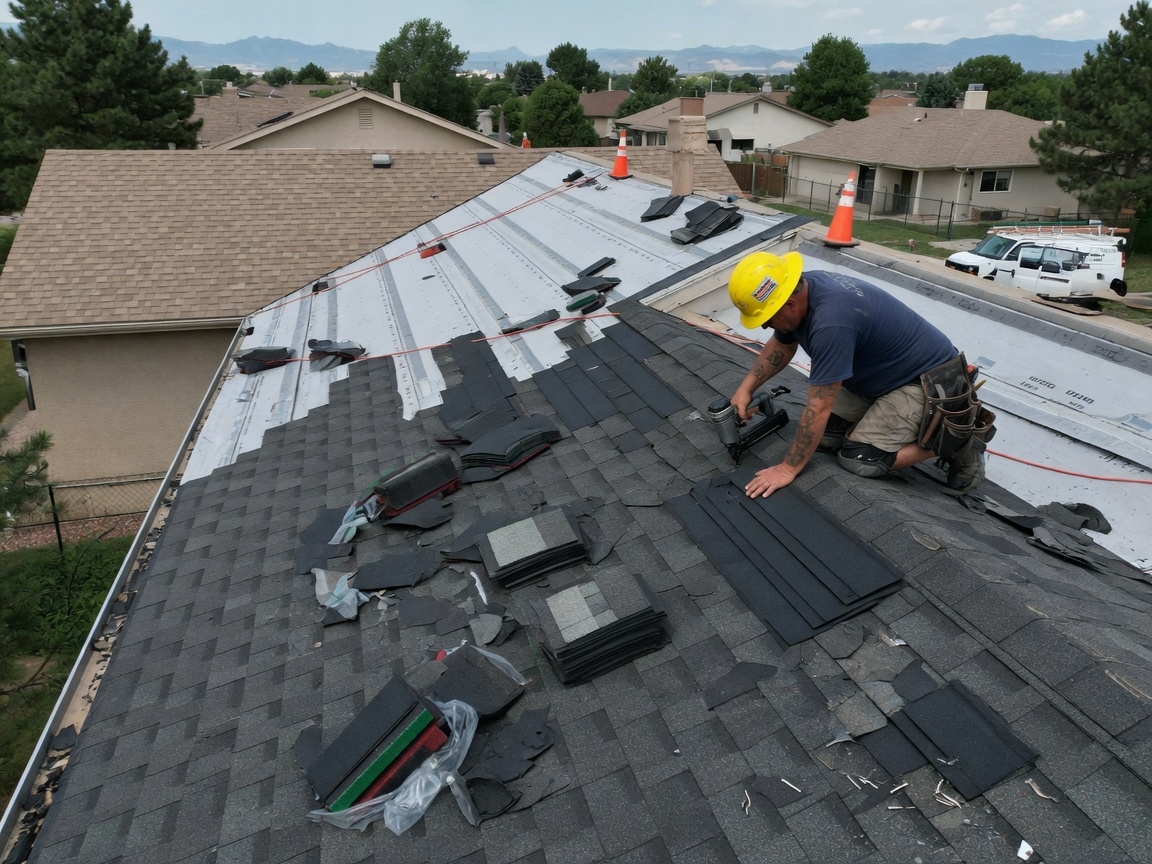
Bellflower developed earlier and denser than most of our service area. Much of the housing dates to the 1940s and early 1950s on lots noticeably smaller than Lakewood's, and the city carries a far higher share of duplexes, fourplexes and small apartment buildings. That mix changes the work: a meaningful portion of Bellflower roofing is income property, quoted to landlords who care about service life and predictable cost rather than how the shingle blend looks from the curb.
The single most common leak source in Bellflower is the junction between an original pitched roof and a later addition. Additions are widespread here, permitted and otherwise, and the transition where an old gable meets a newer flat or low-slope section is where water gets in. These junctions are frequently detailed with a bead of sealant rather than proper step flashing and counterflashing. That holds for a few winters and then fails, usually into the room below the joint.
Smaller lots also mean tighter working conditions. Driveways are narrower, side yards are often under five feet, and rear structures are common, so dumpsters frequently have to sit street-side and material moves further by hand. None of that is difficult, but it is slower than a Lakewood tract job and we price it honestly rather than pretending the two are equivalent.
The upside is that most Bellflower roofs are small. A 1,100 square foot single-story house needs less material and fewer crew days than the 1,800 square foot homes common further east, which keeps total project cost down even with the access premium.
Around Bellflower
We regularly work near:
- 📍Caruthers Park
- 📍Simms Park
- 📍Bellflower Civic Center
- 📍St. John Bosco High School
- 📍Thompson Park
- 📍Bellflower Boulevard
Roofing Lakewood Ca in Bellflower — Local Notes
- •Housing runs mainly 1940s to early 1950s on smaller lots than surrounding cities, so individual roofs are smaller and total project costs lower.
- •High share of duplexes, fourplexes and small apartment buildings means a lot of the work here is income property rather than owner-occupied.
- •Additions are widespread, and the junction between an original pitched roof and a later low-slope section is the leading leak source in the city.
- •Those junctions are commonly sealed rather than properly flashed, which fails within a few winters.
- •Narrow driveways and side yards mean street-side dumpster placement and more hand-carrying of material.